There is good reason as to why Japanese watches have held a place in the world of horology for so long. It isn’t just all about how a watch wears on your wrist. It is also about the thinking behind it, the attention given to its movement, the consistency of its construction and the discipline that goes into getting the details right.
Japanese watchmaking has developed a reputation for bringing together precision and practicality without losing sight of design. Instead of treating craftsmanship and everyday wearability as separate ideas, Japanese watchmakers have shown that the two can exist comfortably in the same timepiece.
For Alba, that philosophy is part of the brand’s story. Created in 1979 as part of Seiko’s family of timepieces, Alba says its watches are built around the principles that shaped Seiko’s approach to Japanese watchmaking. According to Alba Philippines, each component, from the movement and case to the design, is crafted under standards set by Seiko.
More Than Precision
When people talk about Japanese watchmaking precision, it is easy to focus only on the technical side of a timepiece. But precision is also about consistency, thoughtful construction and making sure the different elements of a watch work together as they should.
That philosophy can be seen in Alba’s Mechanical collection. The watches are not designed simply to showcase an automatic movement. They combine mechanical movements with considered case proportions, dial designs and practical features, creating watches that can actually become part of everyday life.
There is something appealing about that balance. A mechanical watch can be technically interesting without feeling too complicated to wear.
The Heritage Behind Alba
Alba’s connection to Japanese craftsmanship goes back to its beginnings. The brand was created in 1979 and describes itself as being built under principles associated with Seiko’s watchmaking standards. Alba also identifies quality, stylish design and affordability as three defining traits of its watches.
That combination helps explain why the heritage of Japanese craftsmanship continues to matter today. It is not simply about preserving an old way of making watches. It is about carrying forward an approach where the mechanics, materials and appearance all have a purpose.
You can see that idea in the way Alba’s Mechanical watches offer different expressions of the same underlying concept.
Alba Mechanical AL4171X1 – The Clean White Dial
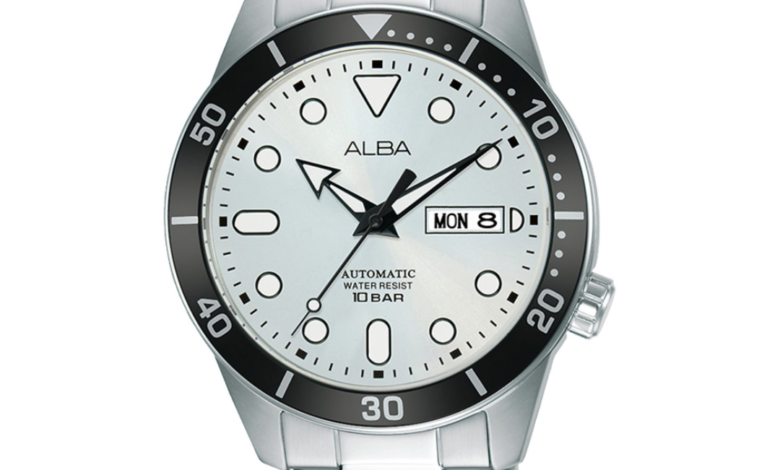
The Alba Mechanical AL4171X1 is a good example of how a mechanical watch can keep its design straightforward while still offering plenty to appreciate.
The men’s model has a 42 mm case and a white dial protected by mineral crystal. It uses the Y676 automatic calibre, with hour, minute and second hands, and comes with a stainless steel wrap bracelet. The watch features day and date functions and is 10 bar water resistant.
The white dial makes the watch feel simple and basic, but the automatic movement is what gives this watch the mechanical nature that can be fascinating. In fact it is a reminder that fine watchmaking does not always have to be overly ornate or complex. In this instance, it is the simplicity of how the case, movement and dial look that is attractive.
Alba Mechanical AU4095X1 – A Different Take On The Same Philosophy
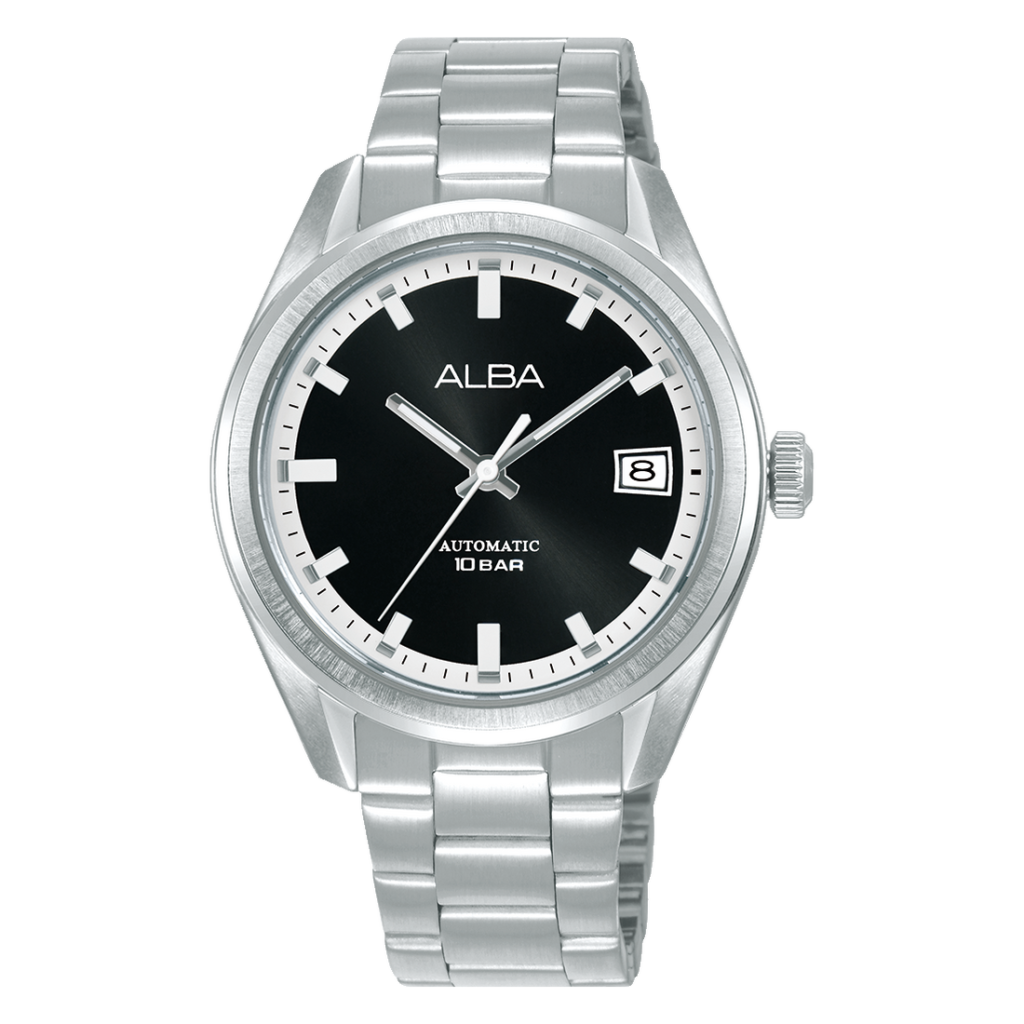
The Alba Mechanical AU4095X1 takes a more compact approach while remaining firmly within Alba’s Mechanical collection.
It has a 38 mm case and a 12.5 mm case thickness, with a black dial under mineral crystal. Inside is the Y675 automatic calibre, with hour, minute and second hands. The watch features a date function, a stainless steel wrap bracelet, and 10 bar water resistance.
The smaller case changes the overall presence of the watch, showing how much personality can come from proportions alone. It is a reminder that good design does not need to follow one fixed formula.
Alba Mechanical AU4085X1 – The Clean White Dial
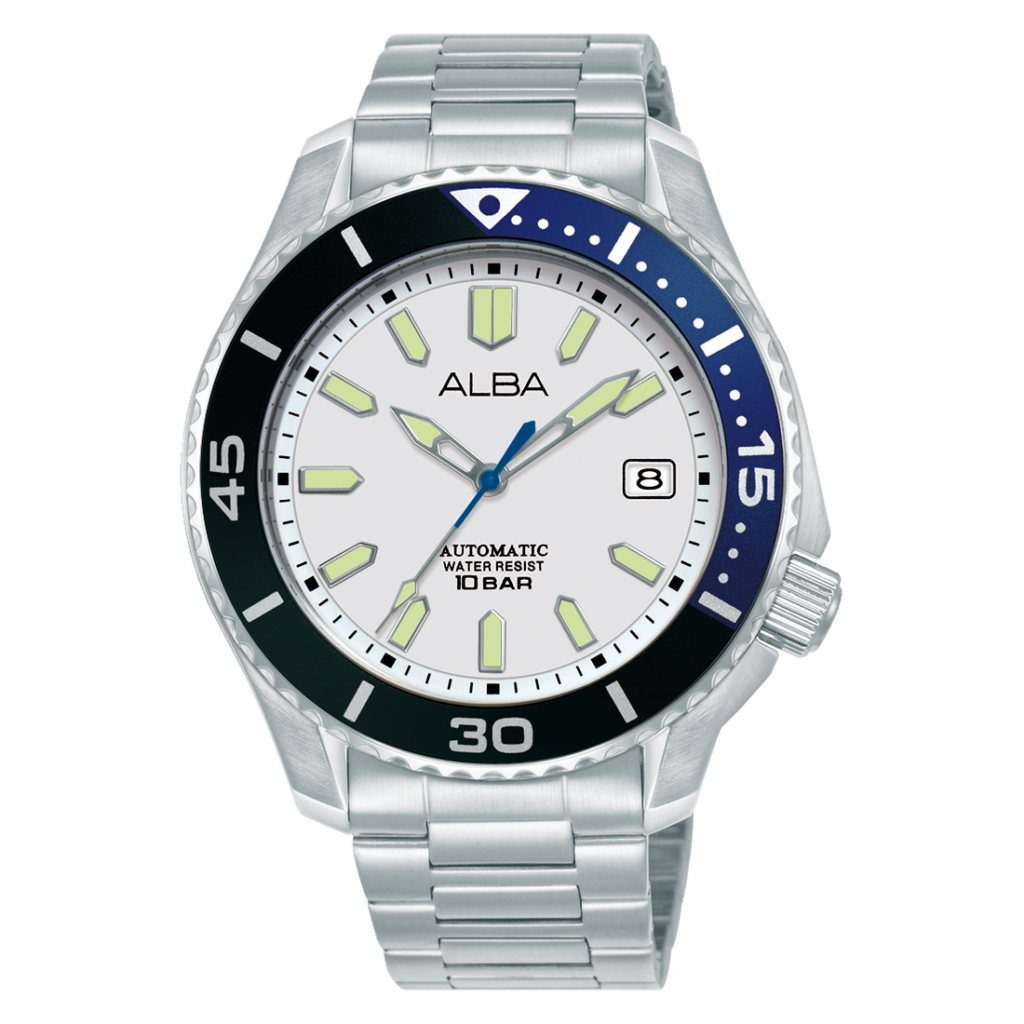
Then there is the Alba Mechanical AU4085X1, which takes the same appreciation for mechanical watchmaking in a lighter direction.
This men’s model has a 42.5 mm case measuring 13.3 mm in thickness. Its white dial is protected by mineral crystal, and the watch uses the Y675 automatic calibre with hour, minute and second hands. It comes with a stainless steel wrap bracelet, includes a date function, and is 10 bar water resistant.
The white dial gives the watch a clean appearance, while the automatic movement keeps the mechanical side of the design quietly present.
See also: Why Family Dentistry Is The Key To Building Lifelong Healthy Habits
Why The Philosophy Still Matters
The most interesting thing about Japanese watchmaking may be that its influence extends beyond technical performance. It has helped shape a broader design philosophy in watchmaking, one where precision does not have to come at the expense of simplicity, and craftsmanship does not have to mean something impractical for everyday life.
That is part of what makes Alba’s Mechanical collection worth exploring. The AL4819X1, AU4095X1 and AU4085X1 have different case sizes and dial designs, but each reflects the same appreciation for automatic movement and considered construction.
The heritage of Japanese craftsmanship is ultimately not just something found in the history books. It continues to influence the watches people choose to wear today.
And perhaps that is why Japanese watches remain so relevant. The best ideas in watchmaking do not need to follow every new trend. They simply need to be made thoughtfully, consistently and with enough character to remain worth wearing.