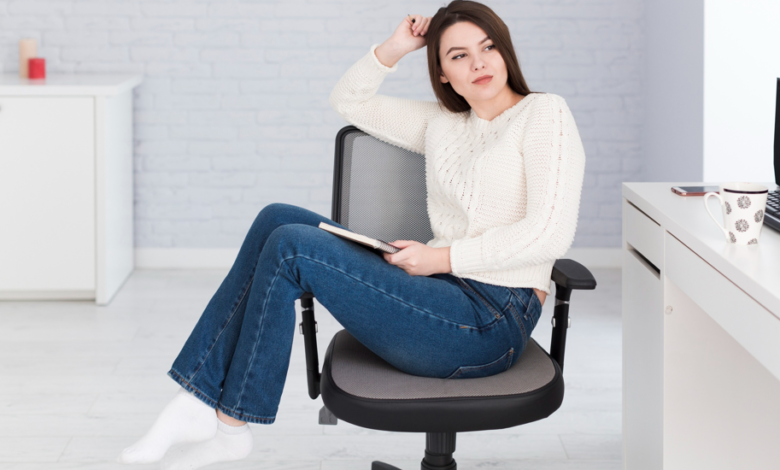
Orthopedic chairs feature medical-grade design elements aimed at correcting posture and relieving musculoskeletal strain. It aligns the spine to prevent chronic pain, promotes healthy circulation, and evenly distributes body weight.
Key takeaways:
- The Danger of Standard Chairs: Traditional office seating lacks targeted spinal support, directly contributing to chronic back pain, neck strain, and poor vascular circulation during long working hours
- Ergonomic vs. Orthopedic: While ergonomic chairs provide general postural alignment to prevent daily fatigue, orthopedic chairs deliver specialized, medically-informed support explicitly engineered for individuals managing chronic conditions like sciatica, joint discomfort, or spinal issues
- The Corrective Mechanism: By combining high-density anatomically sculpted frames, adjustable mechanics, and precise pressure distribution, orthopedic chairs actively correct individual posture and decompress musculoskeletal strain throughout the day
Your standard office chair affects your health by offering no targeted spinal or postural support, causing back pain, poor circulation, and neck strain.
People nowadays are considering ergonomic office chairs for promoting good posture and preventing fatigue during long working hours. However, orthopedic chairs are preferred over ergonomic chairs as they provide targeted, medical-grade support for individuals suffering from chronic back pain, spinal issues, or sciatica.
In this blog, you will discover the 9 ways an orthopedic chair enhances daily comfort and productivity.
What Makes An Orthopedic Chair Essential?
An orthopedic chair is designed to support the natural curvature of the spine, reducing pressure on the lower back and promoting healthy posture during extended periods of sitting.
The key features are-
Feature 1: Lumbar Support System
Lumbar support is the defining feature of an orthopedic chair. It maintains the natural S-curve of the spine, directly reducing lower back strain and disc pressure during prolonged sitting.
- It prevents the spine from collapsing into a C-shape during long sits
- Adjustable lumbar depth in the orthopedic chair allows a personalized fit
Feature 2: Adjustable Seat Height
Adjustable seat height in an orthopedic office chair ensures correct leg positioning. Keeping feet flat on the floor and thighs level to reduce hip pressure and improve blood circulation.
- The pneumatic gas lift allows quick, tool-free height adjustment
Feature 3: Seat Depth Adjustment
Seat depth adjustment in an orthopedic chair prevents pressure on thighs, resulting in reduced poor blood circulation issues. It ensures the correct distance between the seat edge and the back of the knees with the seat adjustment.
- It allows the seat pan to slide forward or backward
- Ensures 2-4 fingers of space between the seat edge and the back of the knee
Feature 4: High Backrest with Spinal Contouring
Full-height backrests in ortho office chairs support both the lumbar and thoracic spine.
The contoured shape mirrors the natural S-curve of the back.
- It helps in forward head posture and prevents slouching
Feature 5: Adjustable Armrests
Adjustable armrests on an orthopedic chair reduce upper body tension by supporting the arms at the correct height. Height-adjustable arms keep elbows at a 90-degree angle.
The width-adjustable arms accommodate different shoulder widths, preventing shoulder elevation, upper back fatigue, and neck strain.
Feature 6: Tilt Mechanism & Recline Control
A tilt and recline mechanism on an ortho office chair enables dynamic sitting. It allows users to shift positions throughout the day, reducing static spinal load and muscle fatigue.
Synchro-tilt moves the seat and back together in a natural ratio, encouraging dynamic sitting throughout the day.
Feature 7: Breathable Seat and Back Material
The breathable materials in orthopedic office chairs dissipate body heat and wick moisture to prevent sweat buildup during long hours.
- Mesh upholstery promotes airflow to reduce heat and sweat build-up
- Prevents discomfort during long sitting sessions in warm environments
- Foam seat padding distributes body weight evenly across the seat pan
- High-density foam maintains shape and support over time
Feature 8: Swivel Base and Smooth-Rolling Castors
A swivel base and smooth-rolling castors on an ortho office chair reduce repetitive twisting and reaching strain, in comparison to ergonomic office chairs.
- Quality castors allow effortless movement across floor surfaces
- Heavy-duty 5-star base provides stability at all recline angles
- Floor-friendly castor options for both hard floors and carpet
| Evaluation Vector | Ergonomic Office Chairs | Orthopedic Office Chairs |
| Primary Design Intent | Prevention & Mobility: Formulated to support general skeletal alignment and prevent fatigue during extended sitting | Relief & Correction: Engineered to alleviate pre-existing chronic pain, joint strain, and specific musculoskeletal conditions |
| Target User Group | Daily desk workers, remote employees, and individuals currently free from chronic back pain | Individuals suffering from sciatica, lumbar lordosis, herniated discs, or post-surgical recovery |
| Tilt Mechanism Engineering | Synchronous Tilt: Backrest and seat tilt together in a locked 2:1 ratio to encourage natural, fluid body movement | Independent Free-Float Mechanics: Backrest and seat adjust completely independently, often allowing a 3-5° negative/forward tilt to decompress lumbar discs |
| Cushion Density & Core | Contoured Comfort: High-density molded foam or flexible mesh intended to distribute body weight evenly | Dual-Density Corrective Core: A firm inner therapeutic core wrapped in a softer outer layer to eliminate slouching and protect the tailbone (coccyx) |
| Medical Endorsement | Certifications for commercial workplace safety, standard design metrics, and long-haul durability | Medically informed profiles are frequently recommended or prescribed by chiropractors and physiotherapists |
| Nairobi Climate & Material Fit | High-tensile, breathable open mesh variations to combat seasonal afternoon humidity | Reinforced high-density frame upholstery combined with specialized lateral or lumbar paddings |
Table: Orthopedic Chairs vs. Ergonomic Chairs
Feature 9: Headrest & Neck Support
An adjustable headrest on an orthopedic chair supports the cervical spine and reduces neck strain. It is essential for users who spend extended hours in front of a screen.
The key benefits include-
- Relieving gravitational strain
- Maintaining spinal alignment
- Active support when reclining
See also: 4- Seater Dining Sets for Rent: The Perfect Fit for Compact Homes and Apartments
To Summarize
Orthopedic chairs are designed to provide enhanced support and pain relief for those with chronic musculoskeletal conditions, joint discomfort, and sciatica.
By utilizing adjustable mechanics, anatomically sculpted frames, and targeted pressure distribution, these chairs correct individual posture and alleviate physical strain throughout the day.
Transform Your Workspace Into a Comfort Zone
Upgrade to an orthopedic chair equipped with custom-tailored adjustability, dynamic spinal alignment, and pressure-relieving foam. Find the best orthopedic office chair from the best online furniture stores in Nairobi!