How Luca Di Michele Is Bringing the Neighborhood Restaurant Spirit of Rome to Miami’s Dining Scene

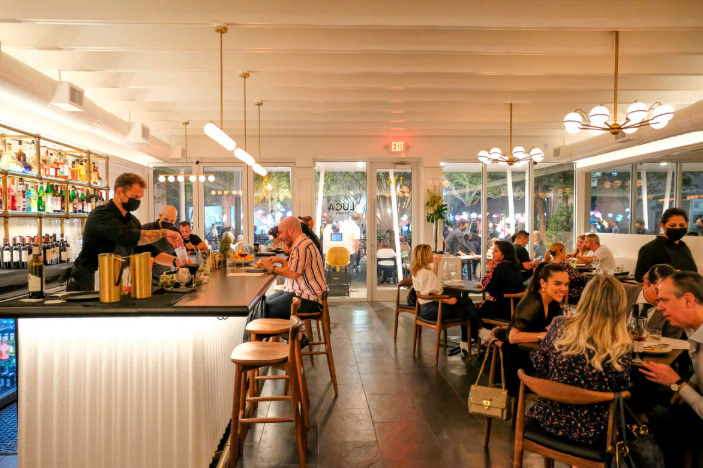
Miami swims in Italian spots, yet it’s mighty hard to find one that skips the theatrical act and just feels like it belongs there. The kind where the food is just good, the welcome is warm, and nobody’s performing a version of Italy for tourists. That’s a much harder thing to build. Luca Di Michele has been working toward it since opening Rosaluna Ristorante in August 2024.
Key Takeaways
- The neighborhood restaurant model that defines Roman dining culture is built on regularity, familiarity, and consistency rather than novelty or spectacle.
- Translating that model to Miami requires adapting to a market that’s simultaneously more demanding and internationally diverse than most Italian cities.
- The restaurants that build a long-term reputation in competitive markets are the ones that prioritize repeat customers over first impressions.
There’s a type of restaurant in Rome that doesn’t have a Michelin star and doesn’t particularly want one. It’s been on the same street for thirty years. The owner knows most of the regulars by name. The menu changes with the season but not with the trend. The food is exactly what it’s supposed to be. It’s also exactly what it was the last time someone enjoyed it. Nobody leaves disappointed, and most people leave having already decided that they’ll come back.
This is the neighborhood restaurant model. It sounds simple. It’s actually one of the hardest things to build in hospitality, because it depends on trust built slowly over time rather than on a launch that goes viral and carries the restaurant for six months before the novelty wears off.
Luca Di Michele has spent five years in the US trying to build something that carries this spirit, in a city that is about as far from a Roman neighborhood as it’s possible to get.
Why Miami Is a Counterintuitive Choice for This Approach
Miami is not a city known for its quiet, long-running neighborhood institutions. It’s a city of spectacle, turnover, and newness. Restaurants open constantly and close almost as quickly.
The dining scene is not just fueled by visitors and seasonal residents, but also by people who want to feel like they’re somewhere exciting. Repeat, loyal, and local custom is less of a given here than it is in most European cities. That makes it a harder as well as a more interesting environment for the neighborhood restaurant model.
Luca grew up in Rome and completed his legal education at La Sapienza University before relocating to New York in 2021. His entry point into the family’s hospitality business, Numero 28 in New York, gave him his first real experience of what it takes to build a restaurant that people return to. Not a spot people try once just because someone pointed them there, but the kind of place they turn into a regular Tuesday night habit.
The lesson Luca took from those early years was unglamorous but consistent: the quality of the experience on the fifth visit matters more than the quality of the experience on the first one.
What This Looks Like at Rosaluna
Rosaluna is built on a few principles that wouldn’t look unusual in Rome but stand out somewhat in Miami’s restaurant landscape.
The food is specific. It’s Italian in the way that it means something rather than in the way that it means everything. There’s no attempt to be all things to all people. The menu makes decisions about what the restaurant is, and it sticks to them.
The service is warm without being performative. Luca Di Michele has always been clear about the difference between hospitality that comes from genuinely caring whether someone has a good time and hospitality that’s been scripted into a training manual. The former is what Roman restaurants do naturally. The latter is what a lot of hospitality programs produce. Getting the former into a Miami restaurant requires hiring for character as much as for competence.
The consistency is taken seriously. This is probably the hardest part. Miami’s restaurant industry relies heavily on a transient workforce. Staff turnover is high. Building a team that delivers a consistent experience across a high volume of covers, on a Tuesday lunch as well as a Saturday dinner, is an operational challenge that most casual observers underestimate.
Luca Di Michele has described this as the thing he thinks about most: not the menu, marketing, or décor, but the team and the consistency of what they deliver.
See also: RAV4s for Sale in Houston: Find the Perfect Toyota SUV for Your Lifestyle
Two Years In
Rosaluna is now entering its third year of operation in Miami. It operates in a market where many new restaurants don’t make it to a second. So, that’s a meaningful milestone for Rosaluna and Luca. But more meaningful to Luca than the survival statistic is whether the restaurant is building the kind of customer base he came here to build.
Luca believes that viral moments or packed weekends driven by a favorable write-up will be forgotten by next quarter. Therefore, he tries harder to bring in the regulars. They come back if the restaurant experience meets their expectations, and because being there feels like belonging somewhere rather than visiting somewhere.
That’s the neighborhood restaurant spirit. It takes longer to build than to launch a campaign. It’s also considerably more durable once it exists. Miami is a harder place to build than Rome. That might be exactly why it’s worth building there.