As sports and recreational facilities continue to expand and evolve, so does the technology aimed at enhancing their efficiency. In an era marked by rapid technological advances, traditional methods of sports field maintenance are increasingly being replaced by innovative, automated solutions. These advancements are not only setting new industry benchmarks but also significantly reducing labor costs and environmental impact. With a growing demand for precision and sustainability in turf management, the integration of autonomous systems is establishing a new standard across the sports industry.
Autonomous Technologies Transforming Field Maintenance
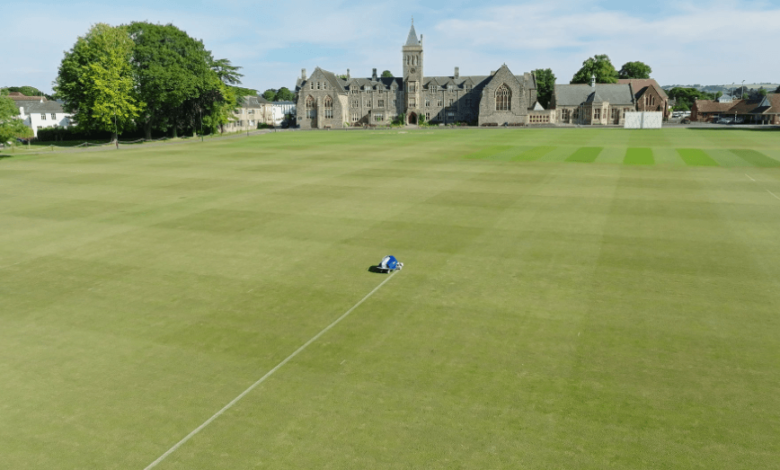
Successful field maintenance no longer relies solely on manual labor and time-intensive methods. Today, cutting-edge digital systems and smart machinery are reshaping how sports pitches, running tracks, and recreational fields are maintained. Modern equipment now features advanced GPS positioning and real-time analytics, ensuring that every line and marking is applied with unparalleled accuracy. One transformative innovation in this field is the robotic line marker. This state-of-the-art system not only offers consistent quality but also minimizes paint waste and reduces labor time, demonstrating a clear technological leap in field management.
As the industry evolves, the benefits of adopting such tools extend well beyond mere automation. Facility managers and sports organizations are increasingly valuing systems that promote operational efficiency while delivering measurable cost savings. By automating the line marking process, organizations can achieve a more uniform playing surface—an essential factor in ensuring fair play and athlete safety. Additionally, these innovations contribute to environmental sustainability, thanks to the optimized use of resources in an increasingly eco-conscious market.
Numerous sports facilities around the world are beginning to document improvements in field quality and maintenance schedules after implementing these technologies. The shift toward automated field management is also supported by a broader trend in digital transformation across various sectors, reinforcing the premise that technology holds the key to effective and lasting solutions.
Economic and Environmental Benefits of Automation
The integration of high-tech solutions in sports field maintenance brings tangible economic benefits. Automated systems, such as those employed in modern field marking, reduce the reliance on manual labor and streamline repetitive tasks. This streamlined approach not only improves overall operational efficiency but also translates into significant cost savings for large facilities and municipal sports centers. In today’s climate of tight budgets and increasing operational costs, automating maintenance routines promises more predictable expenses and a reduction in long-term investment needs.
Beyond financial advantages, the environmental benefits of automation play a crucial role in its rapid adoption. By optimizing the use of materials—such as paint—and reducing the frequency of manual interventions, these technologies contribute to a greener approach in facility management. In particular, the reduction in resource overuse minimizes waste and lessens the environmental footprint associated with traditional maintenance procedures. Given the current global emphasis on sustainability, innovations in fields like automated painting and marking resonate with organizations looking to balance economic imperatives with environmental responsibilities.
Detailed economic and industry forecasts further reinforce the move towards automation. A recent industry report illustrates how investments in advanced maintenance and automation solutions are reshaping market dynamics, highlighting a robust correlation between technology adoption and improved operational efficiency. The study underscores how automated systems provide a competitive edge by enabling facilities to allocate resources more effectively while embracing innovative practices. Learn more details about these trends.
Such economic indicators are critical when considering industry-wide shifts. Facility managers, tasked with achieving a delicate balance between cost-effectiveness and quality, increasingly see the value in these modern approaches. With long-term savings on labor and resources, nearly every stakeholder—from local authorities to private sports clubs—recognizes the merit in transitioning towards a technology-driven maintenance model.
Enhancing Turf Quality: Blending Science and Technology
The quality of a sports field is directly related to its maintenance methods, and precision becomes paramount when dealing with high-performance athletic surfaces. Modern turf management now involves a marriage of traditional agronomy with the latest technological advancements. Detailed assessments of turf type, soil condition, and environmental factors are integrated into smart systems that optimize maintenance schedules and interventions. This shift is particularly relevant in high-stakes environments where every fraction of performance can impact overall athlete safety and performance.
The incorporation of autonomous line marking machines significantly complements this data-driven approach by ensuring that field markings are executed with remarkable precision. In environments where fair play is non-negotiable, a slight deviation in line markings can alter the dynamics of a game. Thus, combining advanced field analysis with precise marking machinery not only guarantees consistency but also elevates the overall quality of the sports surface.
Furthermore, an article on synthetic and natural athletic turf offers comprehensive perspectives on the relative benefits and limitations of various turf types, emphasizing how tailored maintenance strategies can optimize performance. By merging technological precision with scientific analysis, sports facilities can adopt more nuanced strategies that cater specifically to their unique turf characteristics.
In addition to improving safety and performance, employing advanced marking systems ensures that facilities remain compliant with sporting standards. The attention to detail afforded by automated marking systems supports consistency across multiple playing surfaces. As technology continues to evolve, the ability to adapt these systems to cater to various turf types will only grow, marking a significant milestone in sports facility management.
The Broader Impacts and Future Trends in Field Automation
The transformation in field maintenance extends far beyond enhanced marking precision. In the broader context of sports and facility management, the integration of autonomous systems has spurred an industry-wide rethinking of operational strategies. As digital technologies become more pervasive, additional layers of automation are being introduced in areas such as irrigation, fertilization, and even damage assessment, ultimately leading to a more integrated, smart management system.
This shift is prompting traditional businesses to reevaluate their existing maintenance paradigms. Facility operators are now exploring innovative ways to incorporate digital solutions into their day-to-day operations. By prioritizing technology, these organizations are better positioned to ensure that their fields meet the evolving standards of modern sports, which demand both aesthetic excellence and high performance.
Broader discussions in technology and business circles are highlighting the key role of automation in driving efficiency across various sectors. For instance, recent features in Ptiehero’s technology section and in Ptiehero’s business category further illustrate the economic benefits of transitioning to data-driven maintenance paradigms. These narratives underscore a future where innovation and tradition complement each other perfectly, sculpting the blueprint of modern facility management.
Furthermore, the evolving landscape of sports facility maintenance is set to benefit from ongoing research and development investments. With continuous improvements in sensor technology, data analytics, and machine learning, the next generation of autonomous systems will become even more effective at addressing specific maintenance challenges. As these technologies mature, their role in not only maintaining but also enhancing the quality of sports facilities will become indispensable.
The journey toward fully integrated, tech-driven facility management is well underway. Progressive sports organizations recognize that embracing change is not simply a matter of operational efficiency, but also a strategic imperative for long-term success. The integration of robotics and digital tools in field maintenance is a testament to the transformative power of innovation—a power that is redefining the intersecting worlds of sports, technology, and sustainable operations.
See also: Why Family Dentistry Is The Key To Building Lifelong Healthy Habits
Embracing the Revolution: Looking Ahead
As the sports industry continues to evolve, the role of automation becomes ever more prominent. The debate over traditional versus modern methods is giving way to a broader consensus: that the integration of autonomous technologies is essential for meeting the dual challenges of financial efficiency and environmental responsibility. Field maintenance is no longer seen as a mundane or purely manual task; it is now at the forefront of technological innovation with a direct impact on the quality of sports performance and spectator experience.
The convergence of robust industry research, innovative robotics, and digital analytics shapes a promising future where sports fields are maintained to the highest possible standards. These technologies herald a new era in which operational requirements align seamlessly with sustainable practices and economic realities. Facility managers can now look forward to a future where cutting-edge innovations not only streamline labor and reduce costs but also enhance the overall experience for players, coaches, and fans alike.
By adopting a forward-thinking approach and embracing advanced tools, the sports facility industry is poised to experience a transformation that will resonate on multiple levels. Whether through improved efficiency, enhanced performance, or stronger environmental stewardship, the integration of technology in field maintenance is laying the foundation for a safer, more sustainable future.