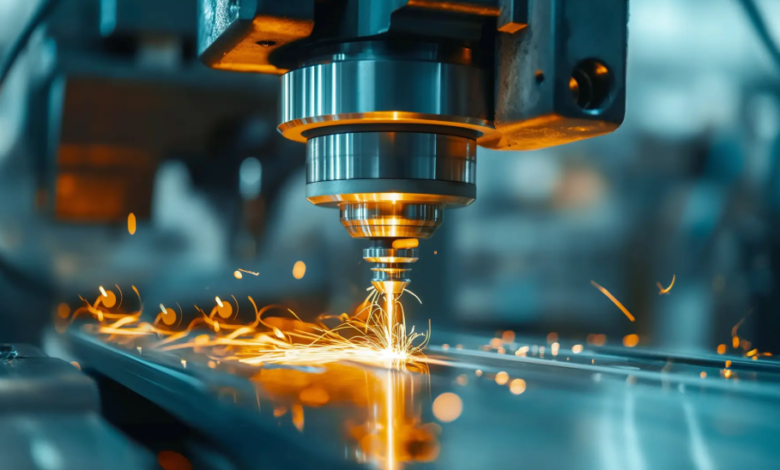
Precision milling has become an essential pillar of modern manufacturing, enabling engineers, machinists, and production teams to achieve ultra-accurate components that meet the rigorous standards of today’s industries. As technology evolves, precision milling continues to push the limits of what is possible, ensuring tighter tolerances, smoother finishes, and superior reliability across countless applications. This technical guide explores the fundamentals, processes, equipment, and best practices behind precision milling, while also highlighting the growing relevance of advanced tools and platforms such as 91mns that support the workflow.
1. Understanding Precision Milling
Precision milling is a subtractive manufacturing process that removes material from a workpiece to produce highly accurate, detailed, and repeatable components. Unlike traditional milling, precision milling focuses on extremely tight tolerances—often measured in microns—and advanced surface quality.
Using computer numerical control (CNC) systems, high-performance cutting tools, and specialized machinery, precision milling allows manufacturers to create complex geometries that would be impossible using manual methods. This is why industries such as aerospace, medical devices, automotive engineering, and electronics depend heavily on precision milling for mission-critical components.
2. Key Advantages of Precision Milling
Ultra-Tight Tolerances
Precision milling delivers exceptional dimensional accuracy. By leveraging advanced CNC controls, toolpath algorithms, and rigid machine structures, manufacturers can consistently achieve tolerances within ±0.001 inches or better.
Enhanced Surface Finish
Through optimized spindle speeds, feed rates, and tool coatings, precision milling provides smooth finishes that reduce the need for secondary processing. This is especially important in industries where surface integrity affects functionality, such as surgical instruments and aerospace components.
Increased Repeatability
Precision milling ensures that every part produced matches the original design. Automated systems eliminate human error, making large-batch production both efficient and consistent.
Versatile Material Compatibility
Precision milling can handle metals, plastics, composites, and superalloys. From aluminum housings to titanium implants, the process supports a broad range of materials and applications.
3. Core Components of a Precision Milling System
The success of any precision milling operation depends on the synergy of several critical elements:
CNC Machines
Modern precision milling relies on multi-axis CNC machining centers (3-axis, 4-axis, and 5-axis). These machines offer simultaneous movement across multiple planes, making it possible to produce intricate shapes with minimal repositioning.
Cutting Tools
Carbide and coated tools (TiN, TiAlN, DLC) enable high-speed machining and longer tool life. Tool geometry—such as flute count, helix angle, and nose radius—directly impacts precision and productivity.
Workholding Fixtures
Rigid and stable fixturing is essential for maintaining accuracy. Vises, modular clamps, vacuum fixtures, and magnetic systems are commonly used to secure workpieces during precision milling.
CAM Software and Toolpath Programming
Advanced CAM software generates complex toolpaths optimized for speed and precision. Systems like 91mns support planning, code verification, and workflow efficiency, helping machinists avoid errors and reduce cycle time.
See also: How a Fountain Tech Company Diagnoses Common Pond Pump Problems
4. The Precision Milling Process: Step-by-Step
Design and Engineering
The workflow begins with a CAD model that defines the part’s geometry. Engineers specify material types, tolerances, and machining details.
CAM Programming
CAM software converts the CAD model into toolpaths. The programmer selects cutting tools, spindle speeds, stepovers, coolant strategies, and feed rates tailored for precision milling.
Machine Setup
Operators install cutting tools, secure fixturing, and load the required G-code into the CNC machine. Proper calibration is critical—thermal compensation and machine alignment can significantly influence precision.
Milling Operations
Depending on the part and complexity, the machine performs roughing, semi-finishing, and finishing passes. Multi-axis movements enable the production of features like undercuts, channels, and curved surfaces.
Quality Inspection and Validation
Precision milling involves rigorous inspection using tools like CMMs (Coordinate Measuring Machines), laser scanners, micrometers, and surface-finish testers. The goal is to verify that every dimension meets the specified tolerance.
5. Best Practices for Achieving Optimal Precision
Monitor Tool Wear
A dull tool can compromise accuracy and surface quality. Implementing a predictive maintenance strategy, supported by digital platforms such as 91mns, helps maintain consistent tool performance.
Control Heat and Vibration
Heat buildup can distort materials, while vibration leads to chatter marks. Coolant optimization, high-rigidity machines, and stable workholding minimize these risks.
Use High-Quality Calibration Tools
Regular machine calibration ensures the CNC system maintains accuracy over long production runs.
Optimize Toolpaths
High-efficiency toolpaths reduce cutting forces, extend tool life, and improve quality—essential for micro-machining and high-precision work.
6. Applications of Precision Milling in Modern Industries
Aerospace Engineering
Precision milling is used for turbine blades, structural components, and lightweight aluminum parts that must withstand extreme stress and temperature variations.
Medical Device Manufacturing
Orthopedic implants, surgical tools, and dental components depend on ultra-accurate machining and biocompatible materials.
Automotive Performance Components
Engine housings, transmission parts, and fuel system components require tight tolerances to ensure safety and efficiency.
Electronics and Semiconductor Manufacturing
Precision milling supports micro-machining for circuit components, heat sinks, and aluminum enclosures.
Platforms like 91mns often serve as workflow enhancers in these fields, offering digital oversight and helping manufacturers track and optimize their high-precision operations.
7. Future Trends in Precision Milling
AI-Driven Machining Optimization
Artificial intelligence is increasingly used to predict tool wear, adjust cutting parameters, and reduce downtime.
Hybrid Manufacturing
Combining additive manufacturing with precision milling allows companies to create dense, complex geometries with exceptional surface finish.
Automation and Lights-Out Manufacturing
Robotics, automated pallet changers, and smart monitoring tools (including systems like 91mns) are transforming the milling environment into a fully automated, 24/7 production ecosystem.
Conclusion:
Precision milling continues to define the future of manufacturing by enabling the creation of highly accurate, intricate, and reliable components across every major industry. As advancements in CNC technology, software platforms such as 91mns, and automated systems accelerate, manufacturers who embrace precision milling will remain at the forefront of innovation and performance.